HAM radio license: Intro
If you’ve ever listened in on a local repeater, watched a storm spotter net during severe weather, or just heard someone mention their “callsign,” you’ve probably wondered how people get permission to talk on those frequencies in the first place. The answer is a ham radio license, and getting one is a lot more approachable than most newcomers expect.
This guide walks you through exactly what a license is, why the FCC requires one, and the real steps you’ll take to earn your callsign and join the amateur radio community.
Why you need HAM radio license?
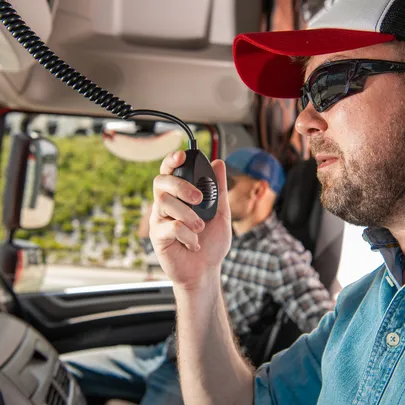
You can’t just buy a radio, flip it on, and start transmitting. Amateur radio operators share the airwaves with police and fire dispatch, aviation communications, marine radio, and cellular networks, so the frequencies have to be carefully managed to avoid interference.
The International Telecommunication Union (ITU) allocates specific bands for amateur radio use worldwide, and individual countries then authorize those bands for their licensed operators. In the United States, that means you need a valid license before you key up a microphone, and you’re expected to understand the operating rules and etiquette that go along with it. Transmitting without a license isn’t just frowned upon in the hobby, it’s illegal.
That licensing requirement isn’t red tape for its own sake. It ensures every operator on the air has a baseline understanding of radio theory, safety, and the rules that keep communications orderly, especially during emergencies when ham radio often plays a critical role.
Don’t have time for self preparation? You can always join paid classes: Click Here
Who issues ham radio license in USA?
In the United States, amateur radio licenses are issued by the Federal Communications Commission (FCC), the independent government agency responsible for regulating interstate and international communications by wire, satellite, and radio.
To actually earn a license, you’ll need to pass a written examination covering basic electronics, radio theory, and FCC regulations. The FCC doesn’t administer these exams directly. Instead, it accredits organizations called Volunteer Examiner Coordinators (VECs) to run testing sessions on its behalf. These VECs work with volunteer examiners, often experienced hams themselves, who administer and grade the tests at local testing sessions held around the country.
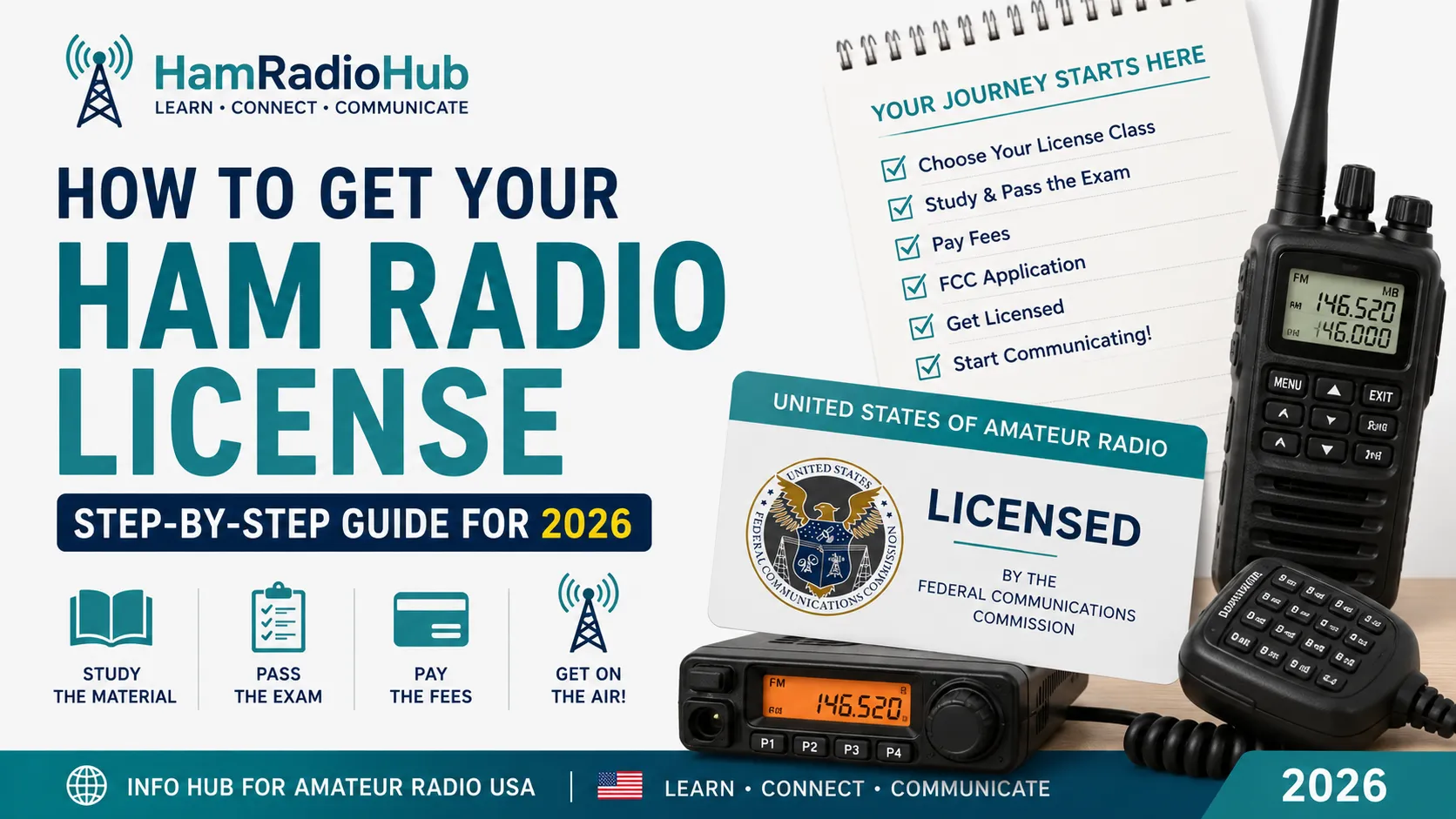
Step 1: Choose your license class
Before applying for HAM radio license exam you must choose the license class you’re eligible for. There are three (3) classes of HAM radio license in the USA:
- TECHNICIAN CLASS HAM RADIO LICENSE (ENTRY LEVEL)
- GENERAL CLASS HAM RADIO LICENSE (INTERMEDIATE LEVEL)
- AMATEUR EXTRA CLASS HAM RADIO LICENSE (FULL ACCESS)
Most beginners start with the Technician Class license, since it requires the least amount of study and still gives you plenty of room to get on the air, especially through local repeaters. From there, many operators study further and upgrade to General or Amateur Extra as they get more comfortable with the hobby.
Each step up requires passing a separate exam covering more advanced radio theory and regulations, so there’s no need to rush. Plenty of hams stay happily licensed at the Technician level for years before deciding to upgrade.
Step 2: Study for the Exam
The good news is that the exams are multiple choice, and the entire pool of possible questions is published in advance, so you know exactly what you’re studying for. Many new hams prepare using:
- Free online question pools and practice exams
- Study guide books published by the ARRL
- Mobile apps designed around the current question pool
- Local ham radio clubs that offer study groups or licensing classes
Some people prefer structured, paid courses that walk them through the material step by step, which can be a good option if self-study isn’t your style. Whichever route you choose, most beginners find that a few weeks of focused study is enough to pass the Technician exam.
Step 3: Find a Testing Location and Register
Ham radio license examinations are administered by Volunteer Examiner Coordinators (VECs). You can find a testing location near you and schedule an exam by contacting a VEC or by visiting the website of the American Radio Relay League (ARRL) or visiting the link here.
To appear in the exam the candidate must register himself to FCC CORE system and get a FRN (FCC Registration Number). Make contact with the examination session administrator to find out the fee and availability of the session, the documents that will be needed, and the deadline for the session.
Step 4: Know What to Bring on Exam Day
On exam day, come prepared. While specific requirements can vary by VEC, you’ll generally need:
- Two forms of identification (typically a government-issued photo ID)
- Your FCC Registration Number (FRN)
- Payment for the exam fee, which covers the VEC’s administrative costs
- A copy of your current license, if you’re upgrading from an existing class
Exam fees are set by the VEC administering the session and can change over time, so it’s worth confirming the current amount directly with your testing coordinator before exam day.
click here for Full checklist of exam day documents and fees structure for ham radio license exam.
Step 5: Pass the Exam and Receive Your License

Once you’ve studied up and shown up prepared, it’s time to take the test. The Technician exam consists of 35 multiple-choice questions, and you’ll need a passing score to earn your license, no essays, no oral component, just careful preparation and a clear head on test day.
After you pass, the volunteer examiners submit your application directly to the FCC. From there, the FCC processes your paperwork, assigns you an official callsign, and adds your license to its public database. You’ll typically see your callsign appear in the FCC’s records within about a week, though a physical confirmation isn’t usually mailed out anymore, most operators simply look up their own callsign online once it’s active.
At that point, you’re legally authorized to get on the air. Many new hams celebrate by making their very first contact, often called a “first QSO,” on a local repeater the same week their license goes active.
FAQs
Do I need to know Morse code to get a ham radio license?
No. The FCC dropped the Morse code requirement for all license classes back in 2007. You can still learn and use CW (Morse code) if you enjoy it, and many hams do, but it’s entirely optional today, not a licensing requirement.
How long does a ham radio license last, and do I need to renew it?
A U.S. amateur radio license is valid for 10 years. Renewal is free and can be done online through the FCC’s system before your license expires. If you let it lapse, there’s typically a grace period, but it’s best to renew on time to avoid any gap in your operating privileges.
Can I get a ham radio license if I’m not a U.S. citizen?
es, in most cases. The FCC allows non-citizens to hold amateur radio licenses as long as they have a valid mailing address in the United States. Requirements can vary depending on your specific situation, so it’s worth checking current FCC guidance if this applies to you.
Also Read: How to Renew Ham radio license in USA?
Other blog posts from the category:
- Ham Radio for Beginners: All in 1 Ultimate Guide in 2025
- How to renew Ham Radio License USA: A Step-by-Step Guide
- Ham Radio Books: 9 Handpicked Books for You!!
- How to Get Your Ham Radio License in the USA 2026: A Beginner’s Step-by-Step Guide
- HAM radio license exam checklist USA 2026
- HAM Radio License Exam Fees in the USA (2026): What You’ll Actually Pay

